The NIKI MP for Achaia warned of an existential threat to the Greek Orthodox presence in Jerusalem and accused the government of limiting its role to the preservation of monuments, without an active diplomatic strategy to protect the Patriarchate and the Holy Sites.
With a clear “yes” to supporting the Patriarchate of Jerusalem, but also with a strong condemnation of the government’s foreign policy, NIKI MP for Achaia, Spyros Tsironis, addressed Parliament during the debate on the bill ratifying the Memorandum of Cooperation between the Ministries of Foreign Affairs and Culture and the Greek Orthodox Patriarchate of Jerusalem.
Opening his speech, he made NIKI’s position on the Convention clear:
“Let me begin clearly, without caveats and without beating around the bush. As NIKI, we agree with this Convention and we will vote in favour of the bill.”
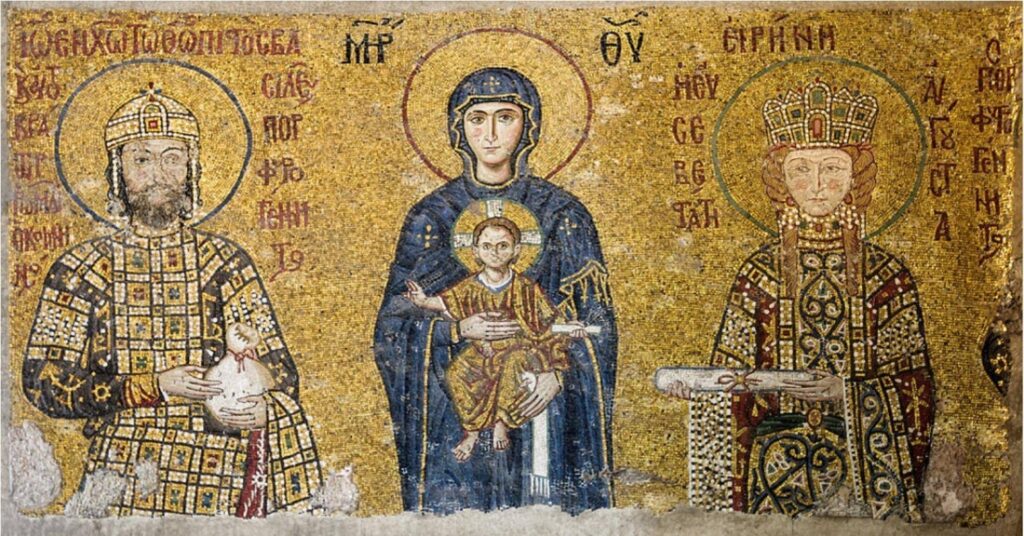
Mr. Tsironis emphasized that NIKI supports the provisions concerning the preservation, restoration, digital documentation, study and promotion of movable and immovable monuments, icons, frescoes, mosaics, as well as the valuable material preserved in the Historical Archive and the Patriarchal Library.
“How could we possibly oppose providing technical, scientific and financial assistance to the oldest institution representing the Christian presence in the Holy Land?” he said.
The positive vote, however, was accompanied by a direct political criticism of the government for the absence of a substantive national and diplomatic strategy concerning the future of the Patriarchate and the Greek Orthodox presence in Jerusalem.
“Our agreement with the technical and administrative aspects of the Convention in no way constitutes a clean bill of health for the geopolitical, diplomatic and national inaction demonstrated by the government in its foreign policy,” he stressed.
The NIKI MP for Achaia accused the government of presenting an administrative and funding mechanism as a major national intervention, while the Greek Orthodox character of the Patriarchate and the status of the Holy Sites are facing serious and multifaceted pressures.
“It is not enough to treat the Patriarchate of Jerusalem and the Brotherhood of the Holy Sepulchre as though they were a museum exhibit,” he pointedly remarked, emphasizing that the Hellenic Republic cannot limit its role to that of a financier of restoration projects.
He made particular reference to an official statement by the Patriarchate of Jerusalem concerning an incident in the Silwan area of East Jerusalem, in which the Patriarchate reported the violent removal of one of its representatives, the seizure of equipment and the fencing off of church property.
According to Mr. Tsironis, such incidents go beyond a simple property dispute, as they are directly linked to the broader issue of preserving the historic Christian presence in Jerusalem and protecting the rights of the Orthodox Church.
“Where is Athens’ national foreign-policy strategy? Where is the active, preventive and assertive diplomacy? What exactly are you, as a government, doing to preserve the historic, canonical, administrative and demographic character of the Brotherhood of the Holy Sepulchre and the Patriarchate?” he asked from the floor of Parliament.
The NIKI MP spoke of “tectonic changes” in the wider region, with local and international forces seeking to reshape established balances and the historic status quo of the Holy Land.
“The Greek government cannot respond with a bureaucratic memorandum and nothing more,” he said.
In one of the sharpest passages of his speech, he directly raised the question of the substance of Greek policy:
“Of course the monuments need to be restored. But if we lose sight of the substance—if the Greek Orthodox character of the administration is stripped away, if the Greek presence in the Holy Land is reduced—then what exactly will we do with the restored mosaics and digitised documents? To whom will we hand them over?”
Mr. Tsironis expressed “deep concern for the future of Orthodoxy and Hellenism in the Middle East,” arguing that Athens is following developments in Jerusalem more as an observer than as a power with a historic, political and diplomatic footprint.
“The Patriarchate of Jerusalem is not simply a religious institution. It is a living institution with a history spanning two thousand years, one that preserved the Greek language, the Orthodox faith and national consciousness during the darkest periods of history,” he noted.
At the same time, he criticised the absence of stronger Greek initiatives within the European Union and international forums for the protection of Christian holy sites, religious freedom and the rights of the Patriarchate of Jerusalem.
“Why has Greece not elevated the protection of Jerusalem’s Christian holy sites as a fundamental issue of religious freedom and cultural protection at the European level? Why does it not press for the protection of the Patriarchate’s rights at international conferences?”
He was particularly critical of the government’s approach to safeguarding cultural heritage, which, he argued, focuses primarily on funding programmes.
“History does not judge governments by the funds they approve for the restoration of icons. Those things are self-evident. They are the minimum, the bare essentials. History judges governments by whether they managed to keep the historic legacy of the Nation alive,” he stressed.
Concluding his speech, Spyros Tsironis made clear that NIKI’s positive vote concerns exclusively substantive support for the Patriarchate, accompanied by a strong political condemnation of the government’s complacency.
“We are voting for the Convention because we do not want to deprive the Patriarchate of a single euro or a single study. At the same time, however, we are sending out a warning signal.”
Addressing the government, he concluded:
“We condemn the government’s dangerous inaction, complacency and narrow-minded political approach. Act now. Take initiatives. Protect the Greek Orthodox character of Jerusalem and safeguard the future of the Holy Sites.”
“A resounding ‘yes’ to the Patriarchate, but an enormous ‘no’ to the government’s inactive foreign policy.”